
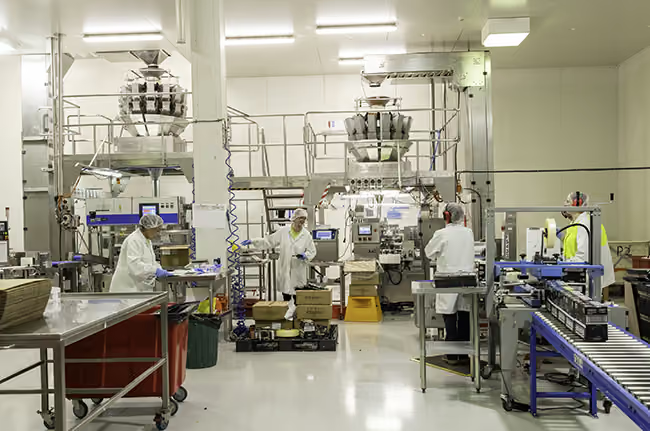
If you are a small or medium business owner, ‘contract packing’ or ‘co-packing’ can sound like a whole industry with its own secret language: doy bags, VFFS, flow wrap, multihead weighers.
It is not as complicated as it sounds, and understanding the basics can help you make better decisions about how your product ends up on the shelf.
Here is a simple breakdown of the most common packaging formats we run and how each one actually works.
Most flexible packaging (doy bags, vertical form fill bags, and flow wrap) runs through some version of the same core process.
The product is fed into a machine where each portion is weighed out. The right weight is then dropped down into the bag. The bag is sealed shut, labelled, checked and shipped.
The main difference is the bag. They come in different shapes and sizes.
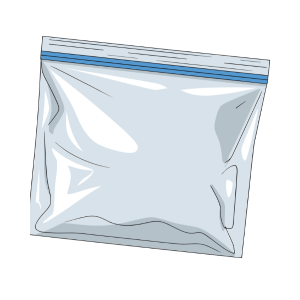
Doy Bags or Doy Pouches
Doy bags are pre-made, stand alone bags. They stand up on a shelf with a flat bottom. Because they arrive as individual, ready-formed units, the task is simple: open the bag, fill it, and seal across the top. This makes doy bags a popular choice for retail-ready products that need to look good standing upright on a shelf.
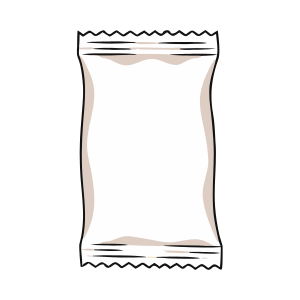
Vertical Form Fill Bags
This format forms the bag itself from a roll of film as part of the packing process. The film is shaped into a bag, filled with product, and sealed along the top, bottom and back. It runs on the same type of line as a doy bag, but has the extra step at the start to create the bag itself. This format is often a more cost-effective option at large scale.

Tubs
The product is weighed out into a tub placed automatically or manually underneath the weigher. This is a great option for products where a rigid, stackable container makes more sense than a flexible bag, for instance for powders or portioned snacks.

Flow Wrap
Flow wrap is a product sealed with a seam along the top, bottom and back for individually wrapped items like bars, baked goods, or single-serve snacks.
The packaging format you choose affects more than just how your product looks. It influences cost per unit, shelf presentation and space, shelf life, and how efficiently your product can run through production.
Our sales and production team have years of experience packaging all sorts of products. Don’t reinvent the wheel: just ask us. Let us help you find the right packaging, scale and process.
Get in touch and we will walk you through the options and help you find the right fit for your product.
Do you have minimum orders?
No, we do not. We are happy to run all packaging jobs.
Do you do trial runs?
Yes, we are happy to do a trial packaging run for your product.
Which certifications do you have?
We hold BRC AA+ and HACCP certification, and can pack to most standards such as allergen-free, gluten-free, hallal, organic and so on in our 6 food-grade packaging lines.
What is the difference between primary and secondary co-packaging?
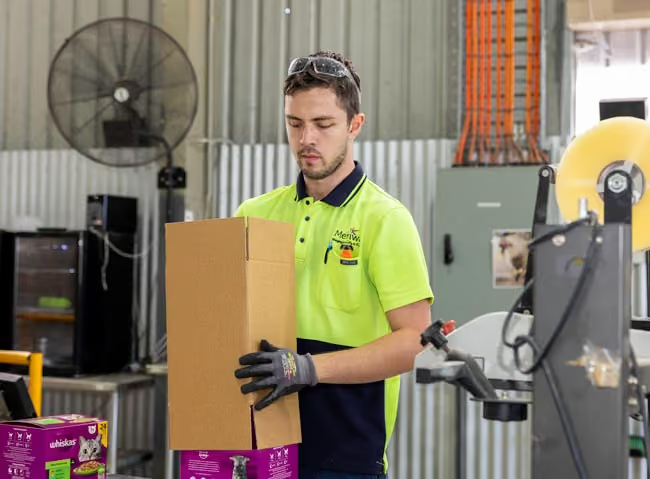
Primary packaging is when the packaging comes into direct contact with the product, for instance a cookie in a wrapper. Secondary packaging is packaging that holds multiple packaged products together, for instance wrapped cookies in a box.
Do I need to supply my own packaging materials, or can Merriwa source them?
We can work with supplied packaging materials or source them according to your needs.
What information do I need to get a quote?
Get in touch, it is easiest to guide you through it. Generally, we need to know: the product, its form, weight, size, volume, frequency, timing, materials, secondary packaging, logistics and specific requirements.
Other questions?
Ask our friendly packaging team!
What is cheaper and better: packing in-house or outsourcing?
There is no easy answer to that question, but we toprovide more information on the costs and benefits of outsourcing co-packing versus inhouse packing here.
Michael Hughes
National Logistics Manager, Mars Pet Nutrition Australia