
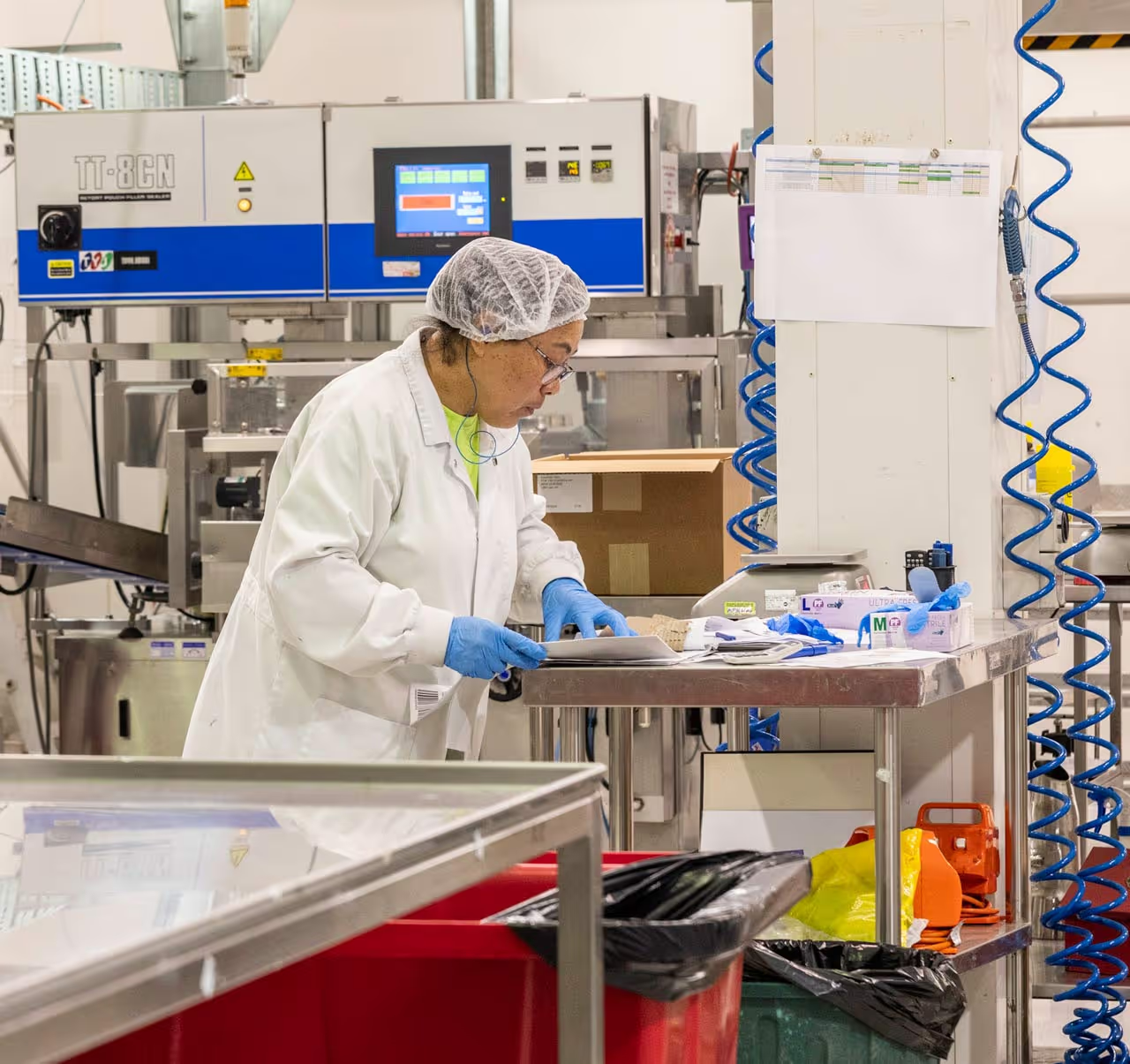
When you are a starting or growing a business, one question is when to outsource part or all of your packaging and when to keep doing it in-house.
There is no general truth, but there are guidelines: outsource packaging when you have uncertain volumes, a largely manual packing process or don't have the capital or expertise to do it yourself, and keep it in house when you have high, predictable volumes and need strict control over recipe, product quality and brand.
Companies most often outsource packaging to avoid the capital and complexity of doing it in-house. Packaging equipment is expensive and needs space, maintenance, and skilled labour, so outsourcing turns a large fixed cost into a variable one that scales with demand.
A co-packer can also absorb seasonal peaks and new product launches without leaving the SME with idle staff or machinery, and can get products to market far faster than building an in-house operation would.
For food businesses in particular, access to certified facilities (such as BRC or HACCP) is often the deciding factor, since it opens retail and large customer channels that would otherwise be out of reach.
Outsourcing also lets you focus on what you do best, whether that is product development, sales, or brand building, rather than being pulled into repetitive, labour-intensive work.
Co-packers bring technical expertise in materials, shelf life, and line efficiency, which reduces waste and quality risk, and they limit downside by letting a business test a product without committing to equipment.
Merriwa now now also bundles packaging with warehousing and fulfilment, so an SME can simplify its supply chain through one single partner.
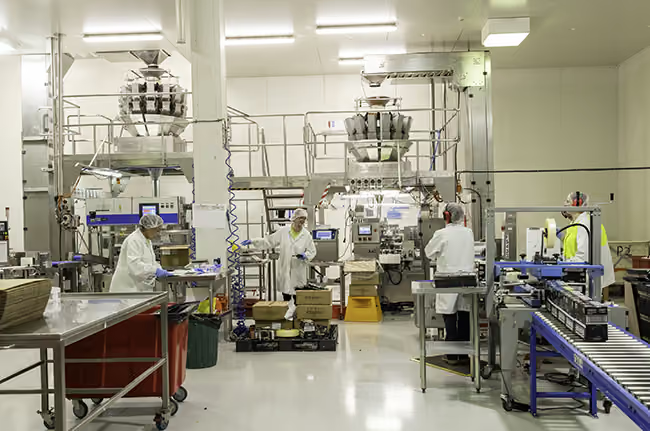
Keep packaging in-house if you aim for control and long-term economics.
Handling packaging directly gives you tighter oversight of quality and brand consistency, faster responses to rush orders or format changes, and no dependence on another company's schedule, minimum runs, or staffing.
Once volumes are high and steady, owning the line usually beats paying a co-packer's margin, and the equipment becomes an asset.
In-house production also protects recipes and proprietary processes from the exposure that comes with sharing them externally, and it avoids the single-point-of-failure risk of relying on one provider whose breakdown, capacity crunch, or compliance failure could halt supply.
In-house packaging also suits products with complex handling needs, tight shelf-life windows, or sensitive allergen controls, where the knowledge is hard to transfer and errors are costly. It keeps production, inventory, and fulfilment closely integrated, builds internal capability, and retains the margin that would otherwise go to a provider.
The dividing line is generally scale and stability: low or uncertain volumes favour outsourcing, while high, predictable volumes and a need for tight control favour in-house.
Many SMEs end up with a hybrid, keeping core lines in-house and outsourcing overflow, new products, or specialised formats.
Because products and production factors vary so widely, there's no universal answer on which option is better or cheaper. As a general guide, outsourcing tends to cost less where products need specialist expertise, demand fluctuates, or in-house production would require new machinery and space. In-house packaging tends to be cheaper where runs are large and predictable, since the investment can be recovered over time and a provider's margin is avoided. Beyond the per-unit price, also consider management time, quality risk and switching costs.
Many growing businesses don't have to choose one or the other. You can start with outsourced packaging while volumes are uncertain, then bring core lines in-house later and keep a co-packer for overflow, new product launches or specialised formats. Many co-packers also offer warehousing, pick and pack and fulfilment, so your packaging and logistics can run through a single partner.
Not sure which option suits your product? Tell us about your volumes and packaging format and we'll give you a straightforward view, even if that means in-house is the better fit.
Michael Hughes
National Logistics Manager, Mars Pet Nutrition Australia

.png)
.avif)



Get in touch
Want to join the team, partner with us, or just learn more?
Merriwa welcomes people of all backgrounds, cultures, identities and beliefs. We value and respect everyone, equating diversity with strength.
We believe inclusion enriches our community, sparks creativity and fosters belonging. Merriwa celebrates our past and recognises the achievements of those who came before. Merriwa is a place where everyone can contribute and succeed.
We acknowledge the Traditional Owners of the lands and waterways, respecting their Elders past and present.